Replace "http://oxygen-absorbers.com/"

Pages

Showing posts with label manufacturer. Show all posts

Monday, 11 December 2023

Improve the Shelf Life Of Wheat Flour-Rice-pulses-grains- How To Store Wheat Flour Long-Term?


Wheat flour is pretty much a staple ingredient and commodity in many cuisines around the world, and also a household name. It is used to make different condiments and staples like bread, pastries, pasta, and many other baked goods. Wheat flour is also a good source of carbohydrates, protein, and fibre.

You can determine the shelf life of wheat flour & rice by a variety of factors, including the composition of the flour, ingredients used, the quality of the ingredients used, the milling process, the addition of stabilizers and additives, long-term storage conditions, and the bleaching process. However, the most common factor that determines the shelf life of wheat is the type of flour and how it was processed and made. Unbleached all-purpose wheat flour has a shorter shelf life than bleached whole wheat flour. So, how can you lengthen the shelf life of wheat flour?

How to store wheat flour long-term efficiently and improve its storage quality?

You can definitely make use of Oxygen absorbers to store wheat flour for extended periods of time. An oxygen absorber is an absorbent material that removes oxygen from the atmosphere or air and aids in reducing humidity and moisture levels during transit, storage, and transport. When oxygen is eliminated from the packaging, it forms an environment that is can easily prevent damage due to mold, insects, and other microorganisms. As a result, wheat flour can be stored for an extended period of time, of up to 10 years, without any kind of damage or loss of its quality.

How to keep rice insects free& fresh for long time?
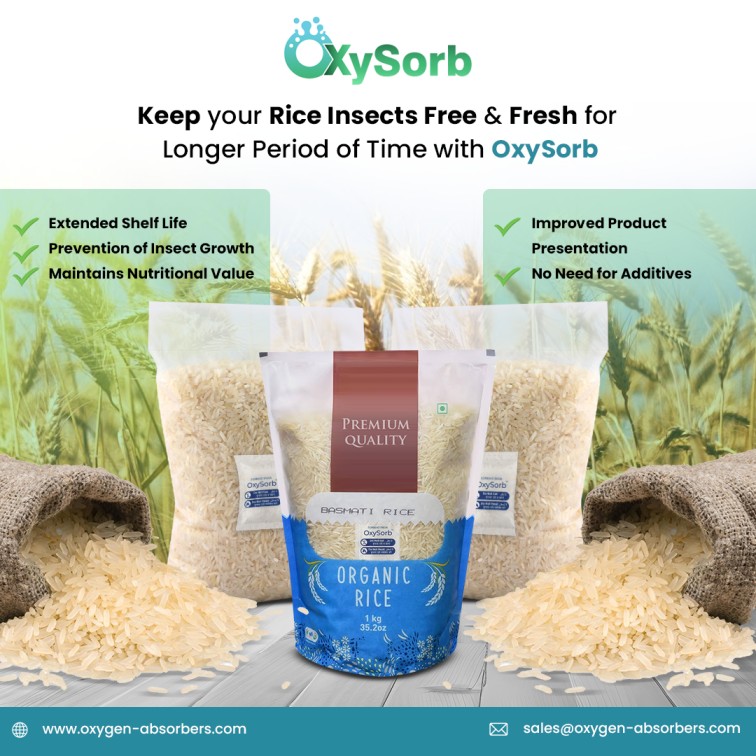
Oxygen absorbers prevent rancidity& insect growth in rice storage; they eliminate it as the sachet of oxygen absorbers soaks the gases and water content in the container and the product. As the rancidity banishes, the product’s quality, aroma, and flavor remain the same.

Factors affecting the shelf life of wheat flour

Moisture plays a big role in how long wheat flour can last without going bad. Wheat flour is in powdered form. absorbs moisture from the air, which can cause it to stick together, and get clogged up with mold and bacteria also form insects. When flour may become wet due to atmospheric moisture or humidity, it not only changes the taste and texture of the flour, but it can also make it unusable. Too much moisture content can cause the flour to become rancid and have a bad flavour, taste, and smell, which means it won’t last as long.

Advertisement

Another important factor is air exposure. So, when wheat flour comes into contact with oxygen from the atmosphere, it can start to oxidize, and chemically change its composition. This oxidation process if not taken care of before time, can cause the flour to lose its freshness, lose some of its nutritional value, and have a bad flavour.

Oxygen exposure can also cause wheat flour to become infested with harmful microorganisms, mould, and insects. Ensuring that your flour is sealed properly and stored in an airtight container is important to reduce the impact of deoxidizer on the flour and extend its shelf life.

Wheat flour’s shelf life is also greatly determined and affected by temperature. Higher temperatures and frequent temperature changes can speed up the breakdown of wheat flour, making it more likely to become rancid and prone to spoilage and infestation. When there are frequent temperature changes, between warm or hot temperatures, the breakdown of the fats and oils in the flour can occur and cause an unpleasant taste and smell of the stored flour.

On the other hand, lower temperatures, like when it’s cold or freezing, can actually help the wheat flour last for longer durations efficiently because it slows down the chemical reactions that may cause it to break down. So it’s really important to store your wheat flour in a cold, dry place, or use oxygen absorbers, to keep it fresh and healthy.

The use of Oxygen Absorbers in Flour, Rice & Pulses Packaging is essential and can greatly help with the long-term preservation of food products, powders, flours, and many other compounds, as it helps to reduce the growth of aerobic bacteria, slows down the oxidation process, and prevents spoilage.

These absorbers are composed of a combination of iron powder and salt, as well as naturally occurring zeolite adsorbent, and are placed in a sachet that is a porous material, easy to adsorb the moisture and humidity. The iron reacts with oxygen to form iron oxide, which effectively removes oxygen from the environment, leaving the contents of the packaging dry and void of moisture or vapor, resulting in longer shelf life, improved taste, and increased nutritional value for stored foods.

Tips on How to Use Oxygen Absorbers for Wheat Flour Storage

  • When selecting a container for storing wheat flour, it is important to ensure that it is airtight, of food-grade quality, and that it can well accommodate the amount of flour that needs to be stored. This way there is no room for moisture to get into the packaging which can lead to spoilage.
  • Make sure the wheat flour is clean and dry. It is important to start with clean and dry wheat flour for the best storage.
  • There are different sizes of oxygen absorbers available in the market, each used for a specific application, so choose and figure out the right size based on how big the storage container is and the guidelines for using them given by the manufacturer.
  • Place the oxygen absorbers into the container with the wheat flour and quickly air-tight seal the container immediately after adding them to prevent air from re-entering the packaging. You need to make sure to seal the container tightly to create an airtight environment.
  • Once sealed air-tight, keep the container cool, dry, and dark in a place that’s not exposed to direct sunlight or extreme temperatures, humidity or moisture levels. This will help keep the oxygen absorbers in good working order and help the wheat flour last longer.

If you follow these steps, you’ll be able to use the oxygen absorbers to make your wheat flour store oxygen-free, keeping it fresh and high quality for a long time.

Friday, 7 July 2023

Extend Shelf Life: Using Oxygen Absorbers in Your Packed Food


Packed food and ready-to-eat food packets are an integral part of modern living that cannot be ignored. Thus, the shelf life of this packed food becomes a critical aspect of the food-related industry. This shelf life indicates a duration when the product can be stored and consumed. During this duration, the product’s quality, nutritional value, and safety are all within check. So that products remain fresh, it is important that their shelf life is extended as otherwise there is more chance of waste or that the product does not meet the regulatory requirement or may not meet the customer’s expectations. Towards this end, one commonly used solution is through the use of oxygen absorbers. They play a significant role in the preservation of the quality as well as the integrity of packed food products and food packaging.

An oxygen absorber for packed food is quite simple in design. They are small packets that contain a mix of iron powder, activated carbon, and sodium chloride (salt). They are designed to remove oxygen from the environment when they are placed in a sealed container or packet. These O2 packets follow a chemical process where the oxygen absorbers remove oxygen and this is known as oxidation. The iron powder that is within the oxygen absorber will react with the oxygen that is in the air and this forms iron oxide or rust which is a by-product. This reaction takes place due to the effect of moisture and so moisture-absorbing materials are packed with the oxygen absorber for packed food. Though the oxidation process produces heat i.e. it's exothermic, the heat is minimal and so the packaging material does not ignite, and neither does the food packaging affect the food product.

O2 packets are available in various sizes and types on the basis of the appreciation and also the volume of the oxygen that has to be absorbed. Oxygen absorbers for packed food are usually iron-based and work well for the packaging of general food. However, when it comes to food or pharmaceuticals, there are specialized absorbers that are required. The sizes too vary from small sachets to larger packets that can be used for bulk storage containers. Therefore it is essential that the right size and type is selected on the basis of the specific requirements and how much optimal oxygen removal is required in order to prolong the product’s shelf-life.

Benefits of Using Oxygen Absorbers in Packed Foods

Oxygen absorbers for packed food provide many benefits. At the most basic level, they extend the shelf life since they remove oxygen from the packaging since oxygen is the main factor that causes the deterioration of food. This is the oxidation reaction that leads to spoilage. When the levels of oxygen are reduced the oxygen inhibitors inhibit the growth of microorganisms as well as delay the degradation process of oils and fats. Furthermore, the oxidation of flavours, colours, and vitamins is prevented as well. Thus, the freshness of the food product as its quality is extended.

The presence of oxygen affects the sensory and quality attributes of packed foods. Through oxygen absorbers, the oxidation of fats is prevented and thus, the freshness, flavour, and texture are preserved. Since the taste, appearance, and aroma are retained customers would be satisfied. Oxygen absorbers for packed food contribute towards food safety as they prevent bacteria and microorganisms from spoiling the food. Due to the reduction of oxygen, the environment is made unfavourable for the survival or growth of these microorganisms and so chances of contamination or food-borne illness are reduced.    


Since the shelf-life is preserved as is the freshness and quality of the food, food waste is minimized due to oxygen absorbers. When products have an extended shelf-life they would not spoil or deteriorate prematurely. Thus, food waste is reduced as less food needs to be discarded. Thus, this is not only cost-effective but environmentally sustainable. Furthermore, oxygen absorbers for packed food are versatile and can be used in many types of ready-to-eat packets for snacks, baked foods, processed meat, dry goods, etc. Also, these are adaptable to various types of food packaging like bottles, cans, and pouches as versatile solutions for various food packaging applications.

Food packaging is the only place where oxygen absorbers are used. Though they are primarily used in food packaging there are other industries too which benefit from their use. In the food industry, they work towards the preservation of the flavour, nutritional value, and overall quality of the food. This includes baked goods, dried fruits, snacks, processed meats, and spices in which these oxygen absorbers are used for packed food. Nutraceuticals and pharmaceuticals are oxygen-sensitive and thus, oxygen absorbers prevent the degradation of these products due to oxidation of their active ingredients and this ensures the continued efficacy and potency of the products.    

There are also medical devices that are oxygen-sensitive like test strips, pharmaceutical packaging as well as diagnostic kits. Oxygen absorbers help in maintaining their integrity as well as their stability. Thus, the application of oxygen absorbers is primarily used where a controlled environment is required and oxygen needs to be removed. The quantity of oxygen absorbers would depend on the volume as well as the type of food packing and the food product whether they are dry goods like pasta, grains, etc, snacks, or meat products, the quantity would change accordingly.

Thus, oxygen absorbers have varied uses in packed food products from the extension of their shelf-life to improved quality, reduced food waste, and an enhancement of safety.  By minimizing the presence of oxygen the absorbers help to preserve the nutritional value, freshness, and taste of the products so that customers are satisfied with the product’s quality.

Saturday, 4 February 2023

How to Spot the Best Makhana Storage for You: X Signs and Features


What is Makhana?

Makhana is a type of Lotus Seed also called Fox Nuts, Euryale Ferox, Phool makhana, or gorgon nuts. That is widely consumed in India and other parts of Asia. . It belongs to the family of Euryale ferox and is a staple in many traditional Indian cuisines. It is a nutrient-rich food that is often used in traditional Ayurvedic medicine. Makhana is a good source of protein, potassium, magnesium, phosphorus, and iron. It is also low in calories and fat. Roasted Makhana has a crunchy texture and a nutty flavour that makes it a great addition to any meal.

The Way of storing Makhana

The primary benefit of storing Makhana is that it helps it stay fresh and retain its original flavour. Storing Makhana in a cool, dry place or in an airtight container prevents moisture from entering the container and spoiling the Makhana. Storing Makhana also helps prevent it from being exposed to air that can cause it to become stale and lose its flavour. Additionally, properly stored Makhana can last a long time; up to 2-3 years in some cases Makhana can be stored in a number of ways. The most common method is to dry them in the sun. This can be done by spreading them on a clean cloth or tray and placing them in a sunny spot. The fox nuts or makhana can be stored using oxygen absorbers because they can prevent mold and rancidity in them. Oxygen absorber boosts the shelf life up to three times from its original shelf-life. Another way to store makhana is to roast them. This can be done in a pan over medium heat or in an oven at 400 degrees Fahrenheit. Makhana can also be stored in the fridge. This is done by placing them in an airtight container. Makhana can be stored in the freezer for up to six months.

The best way to store Makhana

The best way to store Makhana is to keep it in a cool, dry place or in an airtight container. The airtight container should be lined with oxygen absorbers, which will help to keep the oxygen out of the container and maintain freshness for a longer period of time.


Makhana may pick up moisture from the air resulting in sogginess and rancidity. Pick-up of oxygen and other gases results in loss of crispness in the Makhana, but the oxygen absorber helps remove the moisture content in the package. It should also be stored away from direct sunlight and away from heat or humidity.

Tips on how to keep your Makhana fresh

1. Store Makhana in an airtight container that is lined with oxygen absorbers.

 2. Store Makhana packaging in a cool, dry place away from direct sunlight and away from heat or humidity.

3. Check the Makhana regularly for signs of spoilage, such as mold or insect infestation.

4. If storing raw Makhana, consider blanching it before storing.

5. Place layers of paper towels between the layers of Makhana in the container to help absorb moisture.

Conclusion Storing Makhana properly is the best way to ensure that it stays fresh and retains its flavor. The best way to store Makhana is to keep it in a cool, dry place or in an airtight container that is lined with oxygen absorbers. Additionally, you should check the Makhana regularly, blanch raw Makhana before storing, and place layers of paper towels between the layers of Makhana to help absorb moisture. Proper storage of Makhana will help it last a long time.


Frequently Asked Question

If you’re looking at storing food products that aren’t commonly used then you might find the answer below. These are some of the most common questions people have about the storage life of different food.


·        What is the shelf life of makhana?

Makhana have a longer shelf life if stored properly. Under the right conditions and preservation. Oxygen absorber boosts the shelf life up to three times from its original shelf-life. Properly stored Makhana can last a long time, up to 2-3 years.

To maximize shelf life and preserve quality, Roasted makhana should be stored in an airtight container in a cool, dry place. Keeping them away from direct sunlight, moisture, and heat will help prevent spoilage and extend their shelf life. It's also important to check the makhana regularly for any signs of spoilage, such as a rancid odor or discoloration, and discard them if they show any signs of spoilage.

It's always a good idea to check the expiration date on the packaging and follow best storage practices to ensure that the makhana are safe to eat and of good quality.


·        Does makhana get Spoilt?

Yes, When Makhana is kept open or has improper packaging, it may lead to loss of crispness and may develop rancid due to direct contact with air and get spoilt easily. .But a sachet of oxygen absorber can help in preventing this barrier. 


Wednesday, 20 January 2016

5 Reasons to use Oxygen Absorbers in Food Storage

What are Oxygen Absorbers?
O-busters from Sorbead India
   In the food industry, many food items are transported from one destination to another. In such cases, the food products are packed in containers/closed spaces for days together. When this happens, there are chances that the food items packed may get spoilt or become stale by the time they reach their final point. This is where the role of oxygen absorbers becomes important. 

Oxygen Absorbers are small sachets, which are placed alongside the food products when they are being packed. The oxygen absorbers remove the oxygen present in the packed space, thus leaving behind a nitrogen-filled atmosphere. The presence of nitrogen helps increasing the shelf life of the packed food products. Without oxygen, fungus and other micro-organisms cannot grow in the food packets so they do not get spoiled for a long period of time. Oxygen absorbers bring down the oxygen levels to around .01% or even lesser. Also Check our Latest blog article here:-Oxygen Absorbers | Food Storage

Functioning of Oxygen Absorbers
    The oxygen absorbers function by means of a chemical reaction involving iron powder present in the sachet. When the oxygen absorber starts taking in the oxygen, it will react with this iron powder. As a result of this reaction, the iron powder converts into rust. Once all the iron powder changes into rust, the absorbing process stops as the oxygen absorber is now fully loaded. Next, the oxygen is removed from the absorber. If one needs to use the oxygen absorber a second time, then place it back in the open for the reaction to resume again. 
Five Benefits of Using Oxygen Absorbers
  The advantages of using oxygen absorber sachets in food packets are many. Listed below are five of the important ones:
  1.    The use of oxygen absorbers prolongs the shelf life of the packed food products for longer periods of time.
  2.   Oxygen absorbers remove oxygen from the packages and thus protect food items from fungus and other spoiling organisms like moulds.
  3.  Placing oxygen absorbers will prevent bad smells from spreading in the packages containing food products.
  4.    Oxygen absorbers completely rule out the need for using various kinds of additives like BHA, BHT, sulphur dioxide, sorbet’s and benzoates.
  5.  Oxygen absorbers keep the food products fresh and unspoilt till they reach their destination point.